Showing posts with label Andrea Zuvich. Show all posts

Sunday, 20 July 2014

The Windsor Nell Gwynn Knew

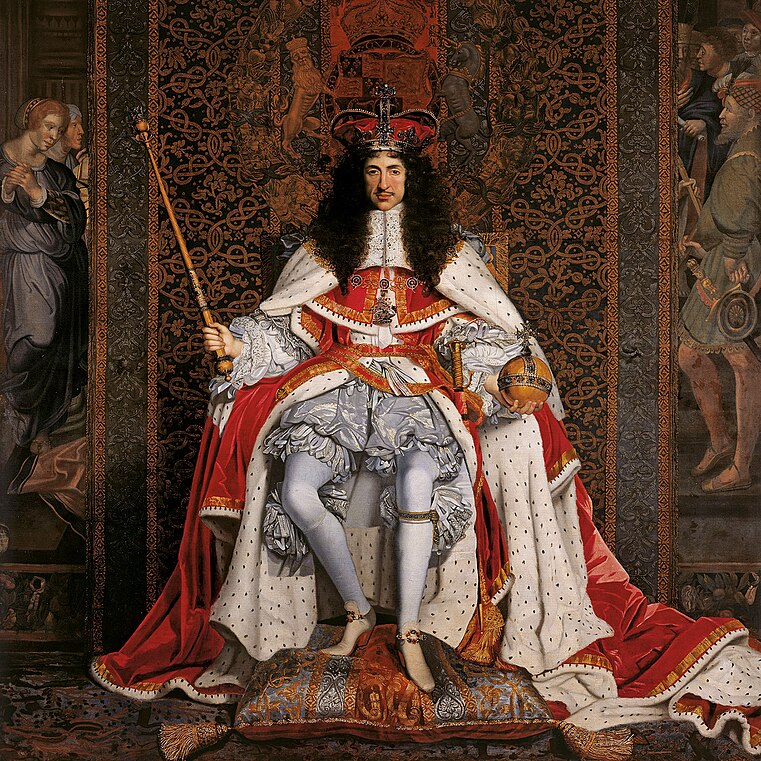
As royal mistresses go, Nell Gwynn is probably our most favourite of King Charles II's mistresses - and with good reason. This saucy, funny, beautiful actress was quite a loveable character - and her royal lover certainly knew that. John Evelyn referred to Nell as, "the Comedian & Apple-woman's daughter", whilst Samuel Pepys called her, "pretty witty Nell." She had risen from impoverished prostitute and orange seller to admired Restoration actress before catching the eye of the Merry Monarch. She had two sons by Charles - Charles and James.


Last month, my husband and I moved from Lancashire to Windsor, and I was excited for many reasons, not least because Windsor has an abundance of 17th-century history. As I turn one corner, walk down this street, stop in front of this house, I can't get over how much history is everywhere. Very near Windsor Castle, there is a small, quaint street which has an array of little shops and eateries. I daresay most tourists - overwhelmed by so much to see - don't realise how old the buildings are. There is a Chinese restaurant in what is referred to as "Nell Gwynn's House" - and there is an inscription on the exterior of this building that states it was built in 1640. You can see how close the castle is to the site of Nell's house.


"The Protestant Whore" had previously lived in houses in Lincoln's Inn Fields and Pall Mall. In Windsor, however, Nell Gwynn is most closely associated with Burford House. In The Story of Windsor, Maurice Bond stated, "Charles II had a strong affection for Windsor. [His] mistress, Nell Gwynn, had a house especially built for her (Burford House) just outside the Castle Walls, and her descendants, the Beauclerks, Dukes of St. Albans, came to play a considerable role in the life of the borough" (page  63).

James Beauclerk, Charles Beauclerk, 1st Duke
St. Albans, Nell Gwynn, by Richard Tompson,
after Sir Peter Lely, before 1693.
The Windsor that Nell Gwynn knew was one of rural life mixed with cockfighting, horse races, and there was a bustling new coffee house. According to The Physical Shape and Urban Landscape of New Windsor 1500-1780 by E.J. Brown, "a coach and postal service were introduced in 1673 and 1674." The River Thames runs by, dividing Windsor from Eton. Windsor Castle, now known to be the oldest and largest inhabited castle in the world, was extensively renovated during the Restoration, following its use as a prison under Cromwell. You can read more about its history here.

By the time Nell began living in Windsor, the 1670s, the town had begun to see a rise in population. Such increase understandably led to some concerns about contaminated wells, more refuse on the streets, and associated health risks. In the early 18th-century, during the reign of Queen Anne, the population had risen more and the queen asked for water to be brought in from a neighbouring area.

As with the home in Pall Mall, London, Nell Gwynn wanted to secure the freehold of the house instead of the leasehold she was originally given. Now, this is a problem many people still face. Indeed, my husband and I had a leasehold in London and we had to pay rent for the land even though we owned the house. It's all rather confusing, but then as now it was far better - more secure - to have the freehold on a property than a leasehold. 

Nell, always a sharp cookie, knew this and did obtain the freehold (first for the Pall Mall property) by telling the king that, "she had always conveyed herself free under the crown , but that she would not accept the house until its freehold was conveyed free to her by the crown." Nell and Charles's descendants continued to own Burford House until the late 18th century.

Image found in The House of Nell Gwynn, 1670-1974.

Burford House, however, was an enchanting dwelling, as you can see from the image above. Great, fabulous gardens were created, and it is believed that the land surrounding the house was no more than forty acres. You can tell how countryfied it was. It is to this day a remarkably verdant area - and I can understand why Charles liked it so - it's very different and quiet - in comparison to London. As a great deal of construction was going on inside Windsor Castle itself at that time, Nell was able to have the interiors of her new, modern home decorated by the highly sought-after painter Antonio Verrio and some elaborate woodcarvings were also created for parts of the house by the talented Baroque woodcarver Grinling Gibbons. We can only imagine how beautiful the end result was! 


Despite her favourable position as a royal mistress, poor Nell was often in debt. In fact, one of King Charles II's last words was to his brother, James. The following is from John Evelyn's Diary entry for 6th of February, 1685:

He spake to the Duke [James, Duke of York] to be kind to his Concubines the DD: of Cleveland, & especially Portsmouth, & that Nelly might not starve.

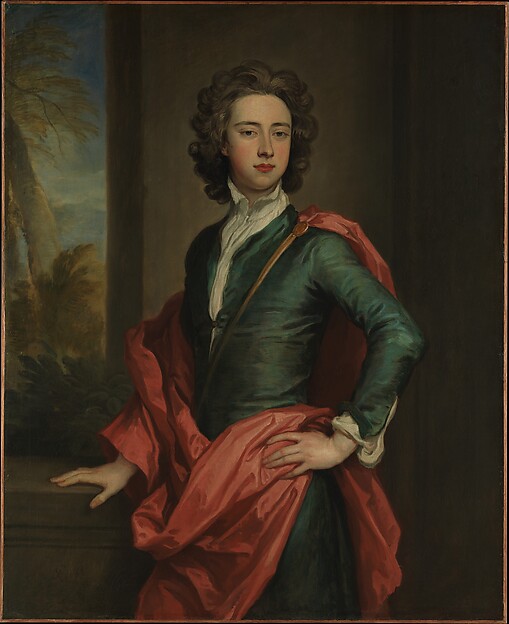
...because she was so often in debt, starvation was a frightening possibility. James stayed true to his promise to his brother and paid of Nell's debts. Nell and Charles's son, the Duke of St. Albans, was financially better off than his mother.

Charles Beauclerk, 1st Duke St. Albans. The Metropolitan Museum of Art.

As stated in The Windsor Beauties:

The Earl of Burford was created Duke of St. Albans in January 1684, and ample provision was made for him by his father. There was a settlement of £5000 a year, chargeable on the Exchequer, he inherited on his mother's death Burford House, and he was given the reversion of the sinecure office of Master Falconer of England and Registrar of the Court of Chancery, both to be hereditary, worth some £1500 a year.
Beauclerk later became a favourite of King William III's following the Glorious Revolution of 1688/89, at which point his fortunes increased. Beauclerk lived in Burford House and eventually married Diana de Vere, with whom he had twelve children.

As I've walked around this part of Windsor, I've noticed so many shop signs and gift shop trinkets that feature Nell. Nell as the busty orange-seller, Nell as the romantic actress, Nell as the wanton mistress. A highly romanticised depiction of her from a 19th-century painting adorns the door to the Windsor & Royal Borough Museum (perfectly situated in the building that Christopher Wren designed!).


It's quite easy to imagine her in her colourful dresses, a bright smile upon her face, as she walked around these streets. I think she'd be astonished to find that, after all this time, people still think on her fondly. I like to think it's because she's the most accessible of Charles II's mistresses, and her warmth transcends time. 

Bibliography:
Adamson, Donald and Peter Beauclerk Dewar. The House of Nell Gwynn, 1670-1974.
Bond, Maurice. The Story of Windsor.
Brown, E.J. The Physical Shape and Urban Landscape of New Windsor 1500-1780.
Evelyn, John. Diary.
Pepys, Samuel. Diary.
Melville, Lewis. The Windsor Beauties: Ladies of the Court of Charles II.
Powell, Roger. Royal Sex: The Scandalous Love Lives of the British Royal Family.

Andrea Zuvich (aka The Seventeenth Century Lady) is usually a 17th-century historian and authoress of historical fiction set in the 17th-century, but she has had to take a break from her beloved history for a month to deal with the craziness of moving house. Now that's sorted out (whew!) she's back, working on three books: William & Mary: A Novel, William Alone: A Sequel, and Anthea: Confessions of a Restoration Actress. She is also thinking about writing a non-fiction history on the Stuarts. She was recently listed as one of the Most Followed Historians on Twitter.


Sunday, 18 May 2014

He Who Commissioned Castle Howard: Charles, 3rd Earl of Carlisle

This weekend, I had the great honour of visiting Castle Howard in Yorkshire, England. This great building, though largely made in the 18th-century, was commissioned in 1699, so it's fair game here. There is only word to describe Castle Howard, and that is...wow!


© Andrea Zuvich 2014

With its design by English Baroque architects Sir John Vanbrugh and Nicholas Hawksmoor, Castle Howard is one of the great gems of late 17th/early 18th century architecture. Vanbrugh and Hawksmoor were also behind the Baroque extravaganza which is Blenheim Palace in Oxfordshire, England, as well as other fabulous buildings, including the Orangery at Kensington Palace. Whilst we were there, my husband asked me several questions about its history - including who commissioned the building. That's a very good question, so why don't we find out more about Charles Howard, 3rd Earl of Carlisle, and his role in the creation of the great Castle Howard.


Indeed, with a visit to a stately home or castle, the curious mind often wonders about the reasons which led to their creation. And so it is with Castle Howard. Who exactly was Charles Howard? Why was he important enough to have such a big house? Did he win military battles like Marlborough? Is that why he had such a house built? When I first became acquainted with the house, after watching the BBC/PBS television series, The Buccaneers, and of course, Brideshead Revisited, I was understandably impressed and awed by the building, but I didn't learn about the man who commissioned it until many years later.


Born in 1669, Charles Howard came from a distinguished aristocratic family. He was the son of Edward Howard, 2nd Earl of Carlisle, who in turn, was the son of Charles Howard (1629-1685). This first Charles Howard was created 1st Earl of Carlisle 1661 under the Restoration King Charles II. 
Image: official Castle Howard website

The 1st Earl's grandson, Charles (of Castle Howard fame) was a Minister of Parliament for Morpeth, but when his father died in his mid-forties, Charles became the third Earl when he was only twenty-three! He had to take on a lot of responsibilities as a result of this, but there were some perks, too. Charles inherited Henderskelfe Castle, a ruined Mediaeval castle, in 1692. 


A few years after inheriting this castle, he had it demolished to make way for a new building - which would become Castle Howard. As we drove away from the building, we saw a gatehouse with towers that have arrowslits (those cross-shaped openings once used for defense).
 This gatehouse and the mock fortification walls you see in the photos below were constructed in the 1720s. The history of that ruined castle in itself would make for interesting research, especially as it was partially rebuilt in the 1680s.


Charles then began to hold increasingly prestigious positions in government. Under William III, Charles Howard was one of that King's last Gentlemen of the Bedchamber (from 1700-1702), and he then had major positions under both Queen Anne and later King George. So whilst he was busy with politics, Vanbrugh and Hawksmoor (his assistant) were designing his dream house. Vanbrugh was, in the late-17th-century, a playwright and theatre manager (he owned the theatre which is now called Her Majesty's Theatre where The Phantom of the Opera has been playing since its debut in 1986).

Unlike Blenheim Palace, which was originally commissioned in honour of the great military leader, John Churchill, Duke of Marlborough, for his success at the Battle of Blenheim, etc, Castle Howard was not built for any such reason. It seems likely that Howard simply wanted a house, and he had both the perfect site for one and the money to make it happen. What we see today is an amalgamation of the original concept, Palladian extras, and a lot of Victorian touches which makes Castle Howard truly unique.


For a full article on Castle Howard, please visit my article at: http://www.andreazuvich.com/history/castle-howard-yorkshire/

Sunday, 23 March 2014

The Eventful Life of Sir Kenelm Digby

Sir Kenelm Digby had the kind of life that makes for an interesting story - an English courtier and privateer, he travelled throughout Europe, was multi-lingual, interested in alchemy and natural philosophy, and was a naval administrator. I really admire him for his great curiosity about the world around him, much like other great men of his time. 

Born in 1603 to Mary and Everard Digby - the latter one of the Gunpowder Plotters who was executed by hanging, drawing, and quartering - Kenelm Digby was as Catholic as his family; something that would eventually bring him some trouble! 

Through the ages he has become most well-known (when he is remembered at all) for The Closet of the Eminently Learned Sir Kenelme Digby, which every researcher of the 17th-century knows and loves. This book, much like The English Hus-Wife by Gervase Markham is chock-full of cookery recipes that would have been helpful back then. Who am I kidding? I make food for my family even now with some of his recipes!

For example, here is his recipe for making a plain, English potage:


"Make it of Beef, Mutton and Veal; at last adding a Capon, or Pigeons. Put in at first a quartered Onion or two, some Oat-meal, or French barley, some bottome of a Venison-pasty-crust, twenty whole grains of Pepper: four or five Cloves at last, and a little bundle of sweet-herbs, store of Marigold-flowers. You may put in Parsley or other herbs."

But before he was into domestic preparations, he had a life of adventure - the stuff of Hollywood films. In the 1620s, the young, dashing, handsome Digby went to sea as a privateer, but things weren't always great. According to The Early Stuarts by Godfrey Davies:

"The Earl of Warwick received a commission to attack any Spanish dominions in Europe, Africa, or America, but achieved little, and Sir Kenelm Digby's semi-piratical expedition to the Mediterranean was equally futile."

It seems that Digby's advancement in government was blocked by the Duke of Buckingham. This is pretty likely, as Buckingham had a reputation to support such behaviour.

The Lewis Walpole Library, Yale University
But not everything was about work. In the late 1620s, Kenelm met the woman who would become his wife. Venetia Stanley was - from every description written and every painting of her - a gorgeous creature. She was very much sought-after and Kenelm was no exception.

Unfortunately, Venetia was seen as a sort of good-time girl, and had openly bestowed her favours on the Earl of Dorset and borne him children. This circumstance was a source of great vexation to Kenelm's mother, who was adamantly opposed the match because of Venetia's known wantonness.

Venetia Lady Digby as Prudence: by Anthony Van Dyck

Also, Venetia was a couple of years older than Kenelm, but that was no impediment for the ardent young man. He was quickly besotted by her, and it appears she quite liked him in return, though there were always many suitors fluttering around her.

But amor vincit omnia, as they say, "love conquers all things" and when Kenelm returned from abroad, he married his Venetia, despite his mother's continued protestations. When people gave him a hard time about her bad reputation, he is said to have responded with: 

"a wise man, and lusty, could make an honest woman out of a brothel house."


Venetia was believed to have fully embraced her role as respectable wife and was very different in her behaviour than when she was a younger woman. She and Kenelm had three sons - Kenelm, George and John.

Sadly, their marital felicity was of short duration. Venetia died suddenly aged thirty-two, and the cause has been a source of mystery ever since. According to John Aubrey's Brief Lives:

"She died in her bed suddenly. Some suspected that she was poisoned. When her head was opened there was found to be little brain, which her husband imputed to her drinking of viper wine; but spiteful women would say it was a viper-husband who was jealous of her, that she would steal a leap."

As mentioned earlier, Kenelm Digby had knowledge of chemistry and probably poisons, too. That being said, however, I think his involvement in her death highly improbable, especially as he had fought hard to win her in the first place, and he displayed overwhelming grief at her death. Some modern historians speculate that drinking viper wine was a bit of a craze, done in order to maintain beauty. Since Venetia was a known beauty and considered rather old already, I don't think it impossible that she tried this potion in order to maintain her famous looks. Here below is the painting of Venetia on her deathbed, as painted by the popular Flemish Baroque artist, Anthony van Dyck.

Image: The Trustees of Dulwich Picture Gallery

Haunted by the death of so dear a wife, Sir Kenelm retreated from the public sphere and Aubrey states he lived like a hermit:

"After her death, to avoid envy and scandal, he retired to Gresham College at London, where he diverted himself with his chemistry, and the professors' good conversation. He wore there a long mourning cloak, a high crowned hat, his beard unshorn, looked like a hermit, as signs of sorrow for his beloved wife, to whose memory he erected a sumptuous monument, now quite destroyed by the great conflagration (The Great Fire)."

As Aubrey stated above, Kenelm 'diverted himself with his chemistry' and by the 1650s, others commented upon this. John Evelyn mentions Digby's scientific pursuits in his Diary entry for 7th of November, 1651:

"I visited Sir Kenholm Digby with whom I had much discourse of chymical matters, I shew'd him a particular way of extracting oyle of (symbol) & he gave me a certaine powder with which he affirm'd he had fixed (symbol) before the late King, which he advised me to try and digest a little better, & gave me a Water, which he said was onely raine water of the Autumnal equinox exceedingly rectified, very volatile, it had a tast of a strong vitriolique, and smelt like aqua fortis, he intended it for a disolvant of (symbol). But the truth is, Sir Kenhelme, was an arrant Mountebank."

Evelyn mentions him again on the 20th of November, 1651:

"I went to see Monsieur Feburs course of Chymistrie, where I found Sir K. Digby, and divers Curious Persons of Learning & quality."

Digby never remarried following Venetia's death and had lived through the reigns of James I, Charles I, the English Civil Wars, the Interregnum, and witnessed the Restoration. He had been one of the founding members of the Royal Society and was an important part of the times.

Sir Kenelm Digby died on his birthday 11th June 1665 at the ripe old age of 62 (a month shy of 63). I know, 62 isn't old at all now - it's almost middle-aged! But I remember the words of Lewis Melville, writing in his book "The Windsor Beauties" when he wrote:

"...was thirty five, which in those days was regarded as quite elderly."

If thirty-five was considered elderly, how much more so was sixty-two?!

At any rate, the epitaph upon his tomb reads:

    Under this tomb the matchless Digby lies,Digby the great, the valiant, and the wise:This age's wonder for his noble parts,Skilled in nix tongues, and learned in all the arts:Born on the day he died, the eleventh of June,On which he bravely fought at Scanderoon;'Tis rare that one and the same day should be His day of birth, of death and victory.


Andrea Zuvich is a 17th-century historian and author of two nonfiction history books on the Stuarts: The Stuarts in 100 Facts (2015), and A Year in the Life of Stuart Britain (2016), as well as the biographical fiction novella His Last Mistress: The Duke of Monmouth & Lady Henrietta Wentworth and also the historical horror The Stuart Vampire. She is the creator of The Seventeenth Century Lady. Follow her on Twitter and Facebook for daily 17th-century factoids, Baroque music and art.

Sunday, 26 January 2014

Bettie, Cromwell's Favourite Daughter

NPG 514, © The National Portrait Gallery, London
Oliver Cromwell is a name that can conjure up strong emotions - even now, some 356 years after his death! To some, he is a glorious hero of republicanism - of freedom from monarchical tyranny. To others, he is the epitome of tyranny and hypocrisy. Utter the name of Cromwell, and images immediately come into view - of soldiers - Roundheads against Cavaliers - and battles such as Naseby, Marston Moor, Dunbar, and many others, flood into our thoughts. When we think of Oliver Cromwell, we think of the hard Parliamentarian - the man who became Lord Protector over the Commonwealth of England. We think of a man who ruthlessly crushed Royalists and Catholics in Ireland. We think of the man whose signature was elegantly penned onto the third spot on the death warrant of King Charles I. We think of a man who became a king in all but name - a man who eventually lived in the same palaces as the king whom he had sentenced to death. 
NPG D28739, © The National Portrait Gallery, London
But Cromwell had another side to his character - that of a loving husband and father. Cromwell's wife, Elizabeth, was a dutiful Puritan wife. Oliver's letters to his wife were full of love - so much so that I found myself completely taken aback by it. 
Oliver and Elizabeth had many children together - Their second daughter, Elizabeth, is perhaps the least well known of the daughters, and so I find her all the more interesting. To be perfectly frank, the only offspring of the Cromwells I had heard of was Richard Cromwell and Bridget Cromwell (since she married Henry Ireton). Therefore, I was pretty surprised to learn about Elizabeth Cromwell, who was affectionately nicknamed Bettie. She was painted by John Michael Wright in 1658 (the year of her death). 
NPG 952, © The National Portrait Gallery, London
Several sources claim that Elizabeth was Cromwell's favourite child, and she possessed a sweet disposition, although she seems to have suffered from what Cromwell referred to as 'vanity and a carnal mind'. Born in July of 1629, Elizabeth was the youngest of Cromwell's children, having followed several siblings, but she was then herself followed by three more. She was truly the apple of her father's eye. When I first saw the portrait featured above, I could see some facial characteristics that she had in common with her father, but I was also surprised by the rather sumptuous dress she is dressed in. Further research revealed that this portrait was most likely painted posthumously. It truly is a stunning work, as you can see - and the vibrant colours are typical of a Wright.
NPG 5497 © The National Portrait Gallery, London

It may amuse the reader to note that John Michael Wright was also a popular portrait painter during the subsequent Restoration. Wright's arguably most famous portrait is that of Charles II's volatile mistress, Barbara Palmer (nee Villiers), Lady Castlemaine, which appears on the right. One can imagine that the Lord Protector would have been quite displeased with the goings-on at the court of the Merry Monarch, but then again, when it came to the Commonwealth and the court of Charles II, it truly was a case of one extreme to the other!
The following is a rather romantic illustration of Cromwell, surrounded by his children (including Bettie), begging him not to proceed with the execution of King Charles. Apparently, Bettie was quite good at stopping prisoners from being executed, but this, sadly did not work out for the king, who was beheaded outside Whitehall Palace on the 30th of January, 1649.
NPG D32080, © The National Portrait Gallery, London
By the time she was sixteen years old, Bettie had fallen in love with the mild-mannered twenty-two-year-old Parliamentarian soldier (who was also her father's Master of the Horse) John Claypole, and she was lucky to have been able to marry for love. She and John were happy in each other's embrace and in the showers of gifts they received from her father (Cromwell made Claypole a peer, thus making his daughter Lady Claypole). The couple had several children.
In 1655, however, the then twenty-six-year-old Bettie began to have noticeable health problems. Lady Antonia Fraser states, 'Bettie Claypole was seriously ill (probably with the first manifestation of the cruel cancer that was ultimately to kill her)'. 
In August of 1658, and after a horrendously painful time, Bettie died. She was only twenty-nine! 
Cromwell was inconsolable. For such a would-be hard man, the death of his favourite little girl was almost too much for him to bear. His health went into rapid decline, and he died only a few months after Bettie. His son, Richard, became the next Lord Protector.
The poet Andrew Marvell wrote a beautiful long poem about the Lord Protector. In this, he alluded to Cromwell's devotion to his daughter when she was on her deathbed. The following is a brief excerpt from 'A Poem on the Death of Oliver Cromwell' :
'If he Eliza lov'd to that degree  
(Though who more worstly to be lov'd then she) 
If so indulgent in his own how deare 
To him  the children of the Highest were? For her he once did natures tribute pay 
For these his life adventur'd every day  
And it would be found could we his thoughts have  
Their griefs struck deepest if Eliza's last.' [2]
And so, Bettie was laid to rest in Westminster Abbey, where other members of her family (including her paternal grandmother Elizabeth) were buried. Cromwell would later be buried in the Abbey as well, but his body was later disinterred and put through posthumous execution during the Restoration. All other Cromwell family bodies were also disinterred and thrown into a pit outside the Abbey. As luck would have it, however, Bettie's tomb remained unnoticed (for it was in another part of the building), and was therefore spared the Stuart revenge. As a result, she is still interred in Westminster Abbey! You can read more about that on the Abbey's website. 
[1] Fraser, Lady Antonia. 'Cromwell, Our Chief of Men'. Weidenfeld & Nicolson Ltd, 1973.
[2] Marvell, Andrew. You can read the complete poem here.
Andrea Zuvich is a 17th-century historian and historical fiction writer. Her biographical fiction debut, His Last Mistress is about the Duke of Monmouth and his doomed relationship with Henrietta Wentworth. She also wrote the historical horror The Stuart Vampire and is currently working on William & Mary: A Novel. www.17thcenturylady.com

Monday, 9 December 2013

Hoydens News - December 2013

It is good to stop and draw breath for a minute and reflect on the busy year the Hoydens have enjoyed.

But firstly we are thrilled to welcome three new members as regular posters to the Hoydens. All these ladies have been guest posters over the past year so they will be familiar to you all. So in no particular order allow us to introduce:

CHRISTY ROBINSON
Christy K Robinson is published in the historical fiction, nonfiction, and inspiration genres, and has edited and contributed to a variety of other books and magazines during her career as a writer and editor. Mary Dyer Illuminated and Mary Dyer: For Such a Time as This are her first novels. To follow her research in 17th-century England and New England, or to contact her, visit http://ChristyKRobinson.com  

Andrea Zuvich, aka The Seventeenth Century Lady, lives in a small town in England. She is a full-time historian, author of historical fiction set in the 17th Century, and often gives lectures about the Late Stuart period, in which she specialises. Originally from Philadelphia, Zuvich grew up in Florida with a keen interest in Early Modern European history. She was one of the original developers of and guides on the Garden History Tours at Kensington Palace. Find out more about Andrea at The Seventeenth Century Lady Website

and
JO ANN BUTLER
Jo Ann Butler, author of The Reputed Wife and Rebel Puritan, was born during the twelve days between Christmas and Epiphany, when Teutonic myth destines her to become a werewolf. In the meantime, she has been a colonial archeologist, genealogist, home health therapist, executive dogsbody, and a computer jockey in San Diego’s aerospace industry. Now Ms. Butler is an essayist and historical novelist. What comes next – besides lycanthropy? 

We are looking forward to their future posts.

And for the battle hardened veterans?

For ANITA DAVISON (writing as ANITA SEYMOUR) The year started off with the release of ROYALIST REBEL, a fictionalised account of the life of the scandalous Elizabeth Murray.  She is currently entertaining murderous thoughts and working on a cosy mystery set in the early years of the twentieth century.


MARY SHARRATT goes from strength to strength with her critically acclaimed recent release ILLUMINATIONS: A NOVEL OF HILDEGARD VON BINGEN winning the 2013 Nautilus Gold Award: Better Books for a Better World. 


DEBORAH SWIFT's latest release A DIVIDED INHERITANCE, a story of love and treachery set in early seventeenth century England and Spain, is getting consistent 4 and 5 star reviews. She has just finished a teen (YA) novel set in the English Civil War so all fingers are crossed that her agent finds a home for it.


KIM MURPHY's non fiction book, book I HAD RATHER DIE: RAPE IN THE CIVIL WAR  (that is the American Civil War) will be released on January 1 2014.  
 "A meticulously documented and gut-wrenching account of the gratuitous acts of violence against women's bodies, black and white, slave and free, young and old… A major work of scholarship that was long overdue, and that all historians should be grateful for." --Susan Brownmiller, author of Against Our Will: Men, Women and Rape.


ALISON STUART's late 2012 release, the  World War One paranormal romance GATHER THE BONES went on to become an Amazon best seller and to gather award nominations in five major awards during 2013.  In 2013 she released a short time travel romance with an English Civil War setting SECRETS IN TIME (currently on sale at Amazon until 14 December). In January 2014 CLAIMING THE REBEL'S HEART, an English Civil War set historical romance based (very, very loosely) on the siege of Brampton Bryan castle will be released. 

If you are looking for some good holiday reading, there are some wonderful options here...

The Hoydens thank their readers for all the support during 2014 and wishes everyone a happy and safe holiday season.

Sunday, 18 November 2012

WILLIAM and MARY

This week we welcome Andrea Zuvich as our guest blogger. William and Mary are the forgotten Stuarts (except to the Irish!) and we are very excited to find out a little bit more about them!


The story of William & Mary is one of duty, love, war, heartbreak, betrayal, and revolution. It was a real game of thrones. This was a unique reign as there was a joint King and Queen upon the throne for the first time in English history.

Mary II, eldest daughter of James, Duke of York (later James II) and niece of the Merry Monarch, Charles II, was a romantic, naturally intelligent but poorly educated, beautiful, feminine girl when she married William III of Orange in 1677.  


William III, by contrast, had lived a solemn lifestyle – one of hard work and duty. He was Stadtholder, or Chief Magistrate, of the United Provinces/Dutch Republic (now the Netherlands) and the constant threat from and warfare with Louis XIV’s France always plagued his thoughts. His passions included hunting and collecting artwork.

William was struck by Mary’s sweet nature and stunned by her incredible beauty, and he immediately asked Charles for her hand in marriage. Mary, then fifteen years old, was devastated to learn that she would have to marry her first cousin William, who was at first sight unattractive, morose, old, and a good deal shorter (William and Mary’s height difference was almost the same as that between Nicole Kidman and Tom Cruise). Remember, Charles II’s Restoration court was flamboyant and colourful, whereas the Dutch Republic was more sombre and calm. Fortunately, she soon fell completely in love with her husband, who was kind-hearted and even funny with his intimates, and also with her adoptive country.


Within a few months of their marriage, 1678, Mary became very happily pregnant. At around four months pregnant, she decided to visit him at his encampment at Breda. Unfortunately, the roads were rough and the coach jostled her about so violently, resulting in a miscarriage. As there was no doctor around with knowledge of gynaecology, she developed an infection. Eventually, in 1679, she became pregnant a second time, but the damage from the first miscarriage was too great and she lost the baby again. Call it wishful thinking, she had all the symptoms of pregnancy again in 1680, but no child came, the symptoms had been misdiagnosed and this was unbearable for the young couple. Mary’s childlessness was a source of deep heartache for her for the rest of her life.

William, in sadness or desperation, turned to another. Imagine how heartbreaking it must have been for Mary, who loved him passionately, to learn that he was carrying on with her lady-in-waiting, Elizabeth Villiers, a woman she had grown up with. There is still debate as to whether William’s relationship with Elizabeth Villiers was sexual, as she never gave birth to any of his children, though the affair presumably lasted for 15 years, and when she did marry, she quickly had children. No letters between them, nothing at all, has survived. Elizabeth remains shrouded in mystery. Perhaps we will never know what their relationship was. One thing remains clear: William was not, unlike his uncles, a highly sexed man. This can be attributed to his ill health – he had severe asthma, suffered from headaches, haemorrhoids, and later, painfully swollen legs and feet.

Persistent rumours of William’s homosexuality, popularised in Jacobite propaganda, cannot be accepted due to lack of evidence. We even have William’s own writing against it. When told of scurrilous rumours surrounding his relationship with his young favourite, Arnold Joost von Keppel, he wrote, “I find it extraordinary that one cannot have esteem for a young man without it being criminal.” (Sodomy was illegal at this time).

Then, in 1688, the Glorious Revolution occurred, in which the Immortal Seven – seven of the most influential, powerful men in England – invited William to take the throne from James II, his uncle/father-in-law, who was unpopular and Catholic. For a brief summary, click here,

William and Mary were crowned in 1689 at Westminster Abbey – he crowned in St. Edward’s Chair, she in a copy of the chair which is on display at the Abbey museum today. Mary was Queen regnant, like Elizabeth I had been (Catherine, Duchess of Cambridge will become Queen consort when her husband William becomes King, not Queen regnant). Mary, though unfortunately not given the same excellent education as Elizabeth I had had, was nevertheless a very intelligent woman and there were pamphlets at the time which depicted her as the new Elizabeth.

Together they purchased the home that would become Kensington Palace and they hired Christopher Wren to remodel both it and Hampton Court Palace.

Their joint reign was short-lived. In late 1694, Mary contracted hemorrhagic smallpox – the most deadly strain of the disease. She considerately sent anyone who had not already had the disease away from Kensington House and put her affairs in order. She went through her journal and ripped out and burned pages that she did not wish anyone else to see.  Mary, aged only 32, died in the early hours of the 28th December, 1694, leaving her husband (who fainted) and the entire nation broken-hearted. To William, whose father had died of smallpox a week before he was born, and who also lost his mother to the same disease when he was ten, it was an earth-shattering blow. Her body lay in state in the Banqueting House until the costly funeral at Westminster Abbey, where “Music for the Funeral of Queen Mary” by Henry Purcell was played.

After Mary’s death, William ruled alone until his death in 1702, and in the intervening years he had become more unpopular, the target of several assassination attempts and he increasingly drank to excess. As he rode his favourite horse, Sorrel, out on Home Park, Hampton Court; the horse stumbled on a molehill, sending William flying off, breaking his collarbone in the fall. Within days pneumonia had set in and William III died at Kensington House. Loathed by his sister-in-law, Mary’s younger sister, now Queen Anne, he was interred with little fanfare. A sad end for someone once heralded as the Protestant Champion of Europe! 

Andrea (aka 17th Century Lady) is a 17th century historian specialising in the late Stuarts & the middle Baroque composers. She went to the University of Central Florida and Oxford University and is a Garden History tour guide at Kensington Palace.  She is currently writing a historical fiction book about William and Mary. You can find her at The Seventeenth Century Lady