Showing posts with label William III. Show all posts

Sunday, 20 July 2014

The Windsor Nell Gwynn Knew

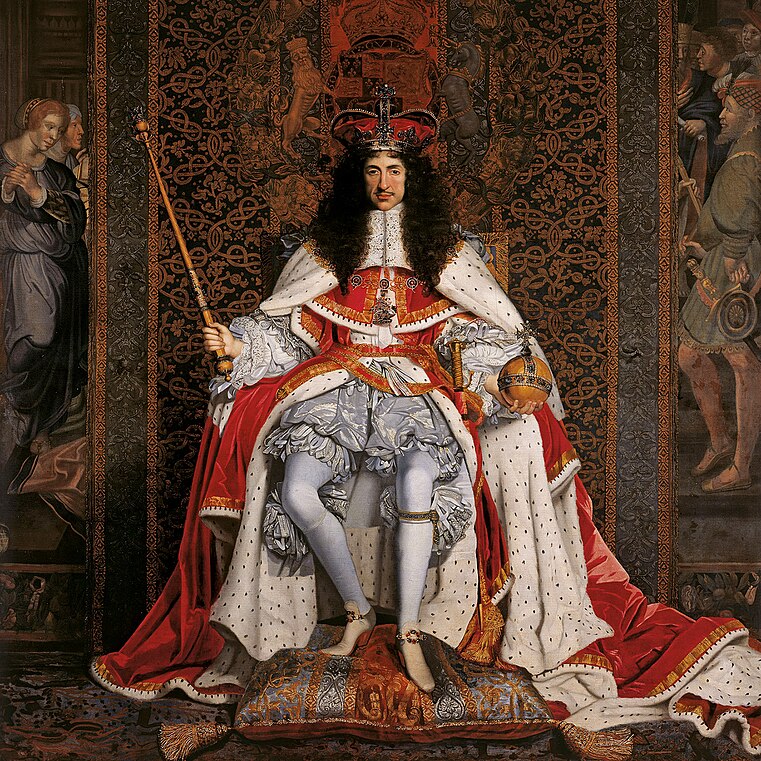
As royal mistresses go, Nell Gwynn is probably our most favourite of King Charles II's mistresses - and with good reason. This saucy, funny, beautiful actress was quite a loveable character - and her royal lover certainly knew that. John Evelyn referred to Nell as, "the Comedian & Apple-woman's daughter", whilst Samuel Pepys called her, "pretty witty Nell." She had risen from impoverished prostitute and orange seller to admired Restoration actress before catching the eye of the Merry Monarch. She had two sons by Charles - Charles and James.


Last month, my husband and I moved from Lancashire to Windsor, and I was excited for many reasons, not least because Windsor has an abundance of 17th-century history. As I turn one corner, walk down this street, stop in front of this house, I can't get over how much history is everywhere. Very near Windsor Castle, there is a small, quaint street which has an array of little shops and eateries. I daresay most tourists - overwhelmed by so much to see - don't realise how old the buildings are. There is a Chinese restaurant in what is referred to as "Nell Gwynn's House" - and there is an inscription on the exterior of this building that states it was built in 1640. You can see how close the castle is to the site of Nell's house.


"The Protestant Whore" had previously lived in houses in Lincoln's Inn Fields and Pall Mall. In Windsor, however, Nell Gwynn is most closely associated with Burford House. In The Story of Windsor, Maurice Bond stated, "Charles II had a strong affection for Windsor. [His] mistress, Nell Gwynn, had a house especially built for her (Burford House) just outside the Castle Walls, and her descendants, the Beauclerks, Dukes of St. Albans, came to play a considerable role in the life of the borough" (page  63).

James Beauclerk, Charles Beauclerk, 1st Duke
St. Albans, Nell Gwynn, by Richard Tompson,
after Sir Peter Lely, before 1693.
The Windsor that Nell Gwynn knew was one of rural life mixed with cockfighting, horse races, and there was a bustling new coffee house. According to The Physical Shape and Urban Landscape of New Windsor 1500-1780 by E.J. Brown, "a coach and postal service were introduced in 1673 and 1674." The River Thames runs by, dividing Windsor from Eton. Windsor Castle, now known to be the oldest and largest inhabited castle in the world, was extensively renovated during the Restoration, following its use as a prison under Cromwell. You can read more about its history here.

By the time Nell began living in Windsor, the 1670s, the town had begun to see a rise in population. Such increase understandably led to some concerns about contaminated wells, more refuse on the streets, and associated health risks. In the early 18th-century, during the reign of Queen Anne, the population had risen more and the queen asked for water to be brought in from a neighbouring area.

As with the home in Pall Mall, London, Nell Gwynn wanted to secure the freehold of the house instead of the leasehold she was originally given. Now, this is a problem many people still face. Indeed, my husband and I had a leasehold in London and we had to pay rent for the land even though we owned the house. It's all rather confusing, but then as now it was far better - more secure - to have the freehold on a property than a leasehold. 

Nell, always a sharp cookie, knew this and did obtain the freehold (first for the Pall Mall property) by telling the king that, "she had always conveyed herself free under the crown , but that she would not accept the house until its freehold was conveyed free to her by the crown." Nell and Charles's descendants continued to own Burford House until the late 18th century.

Image found in The House of Nell Gwynn, 1670-1974.

Burford House, however, was an enchanting dwelling, as you can see from the image above. Great, fabulous gardens were created, and it is believed that the land surrounding the house was no more than forty acres. You can tell how countryfied it was. It is to this day a remarkably verdant area - and I can understand why Charles liked it so - it's very different and quiet - in comparison to London. As a great deal of construction was going on inside Windsor Castle itself at that time, Nell was able to have the interiors of her new, modern home decorated by the highly sought-after painter Antonio Verrio and some elaborate woodcarvings were also created for parts of the house by the talented Baroque woodcarver Grinling Gibbons. We can only imagine how beautiful the end result was! 


Despite her favourable position as a royal mistress, poor Nell was often in debt. In fact, one of King Charles II's last words was to his brother, James. The following is from John Evelyn's Diary entry for 6th of February, 1685:

He spake to the Duke [James, Duke of York] to be kind to his Concubines the DD: of Cleveland, & especially Portsmouth, & that Nelly might not starve.

...because she was so often in debt, starvation was a frightening possibility. James stayed true to his promise to his brother and paid of Nell's debts. Nell and Charles's son, the Duke of St. Albans, was financially better off than his mother.

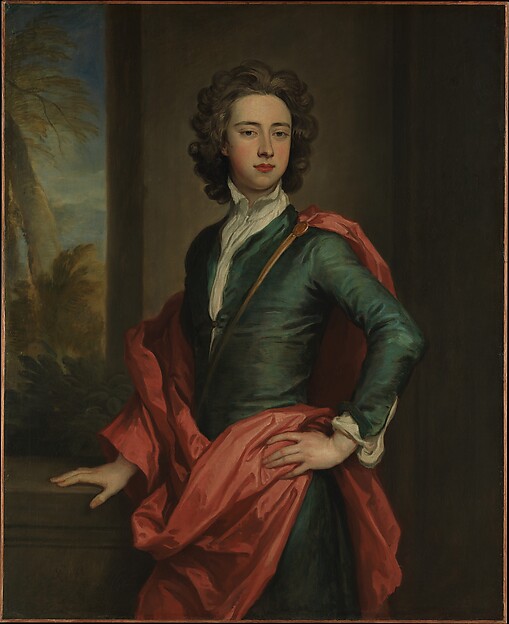
Charles Beauclerk, 1st Duke St. Albans. The Metropolitan Museum of Art.

As stated in The Windsor Beauties:

The Earl of Burford was created Duke of St. Albans in January 1684, and ample provision was made for him by his father. There was a settlement of £5000 a year, chargeable on the Exchequer, he inherited on his mother's death Burford House, and he was given the reversion of the sinecure office of Master Falconer of England and Registrar of the Court of Chancery, both to be hereditary, worth some £1500 a year.
Beauclerk later became a favourite of King William III's following the Glorious Revolution of 1688/89, at which point his fortunes increased. Beauclerk lived in Burford House and eventually married Diana de Vere, with whom he had twelve children.

As I've walked around this part of Windsor, I've noticed so many shop signs and gift shop trinkets that feature Nell. Nell as the busty orange-seller, Nell as the romantic actress, Nell as the wanton mistress. A highly romanticised depiction of her from a 19th-century painting adorns the door to the Windsor & Royal Borough Museum (perfectly situated in the building that Christopher Wren designed!).


It's quite easy to imagine her in her colourful dresses, a bright smile upon her face, as she walked around these streets. I think she'd be astonished to find that, after all this time, people still think on her fondly. I like to think it's because she's the most accessible of Charles II's mistresses, and her warmth transcends time. 

Bibliography:
Adamson, Donald and Peter Beauclerk Dewar. The House of Nell Gwynn, 1670-1974.
Bond, Maurice. The Story of Windsor.
Brown, E.J. The Physical Shape and Urban Landscape of New Windsor 1500-1780.
Evelyn, John. Diary.
Pepys, Samuel. Diary.
Melville, Lewis. The Windsor Beauties: Ladies of the Court of Charles II.
Powell, Roger. Royal Sex: The Scandalous Love Lives of the British Royal Family.

Andrea Zuvich (aka The Seventeenth Century Lady) is usually a 17th-century historian and authoress of historical fiction set in the 17th-century, but she has had to take a break from her beloved history for a month to deal with the craziness of moving house. Now that's sorted out (whew!) she's back, working on three books: William & Mary: A Novel, William Alone: A Sequel, and Anthea: Confessions of a Restoration Actress. She is also thinking about writing a non-fiction history on the Stuarts. She was recently listed as one of the Most Followed Historians on Twitter.


Sunday, 18 May 2014

He Who Commissioned Castle Howard: Charles, 3rd Earl of Carlisle

This weekend, I had the great honour of visiting Castle Howard in Yorkshire, England. This great building, though largely made in the 18th-century, was commissioned in 1699, so it's fair game here. There is only word to describe Castle Howard, and that is...wow!


© Andrea Zuvich 2014

With its design by English Baroque architects Sir John Vanbrugh and Nicholas Hawksmoor, Castle Howard is one of the great gems of late 17th/early 18th century architecture. Vanbrugh and Hawksmoor were also behind the Baroque extravaganza which is Blenheim Palace in Oxfordshire, England, as well as other fabulous buildings, including the Orangery at Kensington Palace. Whilst we were there, my husband asked me several questions about its history - including who commissioned the building. That's a very good question, so why don't we find out more about Charles Howard, 3rd Earl of Carlisle, and his role in the creation of the great Castle Howard.


Indeed, with a visit to a stately home or castle, the curious mind often wonders about the reasons which led to their creation. And so it is with Castle Howard. Who exactly was Charles Howard? Why was he important enough to have such a big house? Did he win military battles like Marlborough? Is that why he had such a house built? When I first became acquainted with the house, after watching the BBC/PBS television series, The Buccaneers, and of course, Brideshead Revisited, I was understandably impressed and awed by the building, but I didn't learn about the man who commissioned it until many years later.


Born in 1669, Charles Howard came from a distinguished aristocratic family. He was the son of Edward Howard, 2nd Earl of Carlisle, who in turn, was the son of Charles Howard (1629-1685). This first Charles Howard was created 1st Earl of Carlisle 1661 under the Restoration King Charles II. 
Image: official Castle Howard website

The 1st Earl's grandson, Charles (of Castle Howard fame) was a Minister of Parliament for Morpeth, but when his father died in his mid-forties, Charles became the third Earl when he was only twenty-three! He had to take on a lot of responsibilities as a result of this, but there were some perks, too. Charles inherited Henderskelfe Castle, a ruined Mediaeval castle, in 1692. 


A few years after inheriting this castle, he had it demolished to make way for a new building - which would become Castle Howard. As we drove away from the building, we saw a gatehouse with towers that have arrowslits (those cross-shaped openings once used for defense).
 This gatehouse and the mock fortification walls you see in the photos below were constructed in the 1720s. The history of that ruined castle in itself would make for interesting research, especially as it was partially rebuilt in the 1680s.


Charles then began to hold increasingly prestigious positions in government. Under William III, Charles Howard was one of that King's last Gentlemen of the Bedchamber (from 1700-1702), and he then had major positions under both Queen Anne and later King George. So whilst he was busy with politics, Vanbrugh and Hawksmoor (his assistant) were designing his dream house. Vanbrugh was, in the late-17th-century, a playwright and theatre manager (he owned the theatre which is now called Her Majesty's Theatre where The Phantom of the Opera has been playing since its debut in 1986).

Unlike Blenheim Palace, which was originally commissioned in honour of the great military leader, John Churchill, Duke of Marlborough, for his success at the Battle of Blenheim, etc, Castle Howard was not built for any such reason. It seems likely that Howard simply wanted a house, and he had both the perfect site for one and the money to make it happen. What we see today is an amalgamation of the original concept, Palladian extras, and a lot of Victorian touches which makes Castle Howard truly unique.


For a full article on Castle Howard, please visit my article at: http://www.andreazuvich.com/history/castle-howard-yorkshire/

Sunday, 15 July 2012

Massacre of Glencoe 1692

In 1688, King James II fled to France, leaving the throne of England open to a bloodless coup by his nephew and son-in-law, the Calvinist William of Orange. Many Highland clans had openly sworn their allegiance to their deposed ‘King Across the water’ and John Graham of Claverhouse, ‘Bonnie Dundee’ led an uprising in 1689 to restore the Stuart King. It failed, leaving Dundee dead and many Highlanders dispossessed and impoverished.

In August, 1691, King William III offered a pardon to the Highland clans if they took an oath of allegiance, after which the chiefs would be restored to their estates. By the end of 1691, the terms had become threatening - the clans would sign the agreement by 1st January 1692, or be punished with the 'utmost extremity of the law'.

The MacDonalds had lived in the Glencoe pass since the early 14th Century, when they supported King Robert the Bruce. From Loch Leven at its northern end to Rannoch Moor in the south, the pass is flanked by rugged mountain scenery that suffers frequent arctic winters.
James Dalrymple Earl of Stair

Alastair MacDonald, 12th Chief of Glencoe, known as MacIain, had joined Claverhouse in 1689. A huge man with flowing white hair, beard and moustache, well respected by his own clan, and feared by others. The MacIains were Reivers, famous for their raiding, pillaging and cattle rustling, and their main enemy was the neighbouring Campbell clan. After two successive Earls of Argyll had been executed and the Campbells weakened, the MacDonalds pillaged huge tracts of Campbell territory in the Atholl Raid of 1685.

Before they could take the oath of allegiance to King William, the Highland clans sent Ambassadors to France to obtain a release from their oath to King James II; a release that was granted on December 12th 1691, though the messenger bringing it didn’t arrive in the Highlands until December 28th - leaving only three days until the deadline.

During the worst of a Highland winter, MacIain left for the newly-built Fort William and presented himself to its Governor, Colonel John Hill, an experienced English officer who had fought with Cromwell. Hill told MacIain that only the civil magistrate could administer the oath, so armed with a letter for Sir Colin Campbell, the sheriff of Argyllshire, MacIain, a man of sixty-one, had to walk the 74 mile journey in deep snow to Inverary, the stronghold of the Campbell clan.

MacIain didn’t even stop to tell his family what was happening, though he passed within half a mile of his own house. He negotiated the Barcaldine Estate, where he was captured by Grenadiers, although only detained for a day, when he reached Inverary on 2nd January to discover that Sheriff Sir Colin Campbell had not yet returned from the New Year festivities, so MacIain had to cool his heels for another three days.

Sir Colin declined at first, by MacIain importuned him with tears and then threatened to protest. On the 6th of January 1692, Sir Colin administered the oath, assuring MacIain's allegiance would be accepted, sent a certificate of compliance to Edinburgh and a letter to Campbell at Fort Willliam that said:
Painting by James Hamilton

"I endeavoured to receive the great lost sheep, Glencoe, and he has undertaken to bring in all his friends and followers as the Privy Council shall order.  I am sending to Edinburgh that Glencoe, though he was mistaken in coming to you to take the oath of allegiance, might yet be welcome.  Take care that he and his followers do not suffer till the King and Council's pleasure be known."


In Edinburgh, Sheriff-Clerk Campbell, Secretary of State for Scotland, John Dalrymple, Master of Stair, and several Privy Councillors, were shown the certificate with MacIain’s signature and Hill’s letter, but instead of presenting MacIain's case, the Sherriff-Clerk Campbell scored MacIain’s name off the certificate. Thus Dalrymple, a Lowlander and Protestant who disliked Highlanders and especially the MacIain, saw this as his opportunity to destroy the MacDonalds and despatched a document to Sir Thomas Livingston, the Commander-in-Chief of the King's forces in Scotland:

"You are hereby ordered and authorised to march our troops which are now posted at Inverlochy and Inverness and to act against these Highland rebels who have not taken the benefit of our indemnity, by fire and sword and all manner of hostility; to burn their houses, seize or destroy their goods or cattle, plenishings or clothes, and to cut off the men."

-these orders were accompanied by Dalrymple's letter which reads,

"Only just now, my Lord Argyle tells me that MacDonald of Glencoe has not taken the oath, at which I rejoice. It is a great work of charity to be exact in rooting out that damnable sept, the worst of the Highlands."


Three commanders - two from the Campbell-dominated Argyll regiment and one from Fort William were ordered to Glen Coe by the beginning of February to await further orders. On approaching the Glen, they were met by John MacDonald, the elder son of the chief, at the head of about 20 men, who demanded Campbell’s reason for coming into a peaceful country with a military force; Glenlyon and two subalterns declared they came as friends, their sole object being to collect the arrears of cess and hearth-money, - a new tax laid on by the Scottish parliament in 1690. Lieutenant Lindsay produced the instructions signed by a now deeply troubled Colonel Hill, the Governor of Fort William.

Captain Robert Campbell of Glenlyon, who was possibly chosen because his niece, Sarah was married to MacIain's younger son, Alexander, [Sandy MacDonald], was put in charge of not only of his own company of infantrymen but the grenadiers, whose commander was Captain Thomas Drummond, the same man whom MacIain had encountered on his way to take the oath of allegiance; a man who would be absent until the eve of the attack.

Using the excuse the fort was full, Glenlyon arrived at Glencoe on 1 February 1692 and claimed hospitality from the MacDonalds. His men were quartered in the clan’s own houses, where they stayed for the next twelve days with Glenlyon making regular visits to Sarah, the sister of Rob Roy MacGregor, and young Sandy MacDonald for the traditional, ‘morning drink’.

On Friday evening, 12th February, Glenlyon played cards with Sandy and his brother John MacDonald, having also accepted an invitation from MacIain to dine with him the following day.That night, a blizzard howled through Glencoe, giving whiteout conditions and just before dawn, John MacDonald, the chief’s eldest son, was woken by voices outside his house. He dressed and went to Glenlyon's quarters at Inveriggan, where the whole detachment was preparing for action. John demanded an explanation, and was told by Glenlyon that the troops had orders to march against some of Glengarry's men and assured him they had no hostile intent toward the MacDonalds.  John accepted this reasoning, after all, hadn’t they all
played cards together the night before, and wouldn’t Glenlyon have warned his niece and Sandy MacDonald?

Reassured, John returned home, but couldn't settle, and when an equally anxious servant told him that twenty troops approached the house with fixed bayonets on their muskets, John gave instructions to waken his brother, Sandy, and then fled to the hills. When soldiers burst through the door moments later, the house was empty – Sandy and his family had also escaped, their tracks covered by the blizzard. High in the hill above the village of Auchnaion, shots were heard by John, Sandy MacDonald, and their families.

At Inveriggan, Glenlyon had ordered that nine men who had been held, bound and gagged for the past few hours be taken outside and shot. MacDonald of Inveriggan, Glenlyon's host for the past fortnight, and a man with a letter of protection signed by Colonel Hill was one of these.

At MacIain’s house in Carnoch, Glenlyon's junior officer, Lieutenant Lindsay, arrived with a party of soldiers and apologised to a servant for calling so early; thus MacIain's murderers were invited into the house. Glencoe was shot twice as he was getting out of bed and fell lifeless in front of his wife, who was stripped naked and thrown out of the house. One of the soldiers is said to have pulled the rings from her fingers with his teeth, then she was left in the snow and died the following day.

At the laird's house in Auchnaion, where Sergeant Barber had been quartered, ordered a detail to attack. Five men were killed instantly and another three wounded.  Amongst those injured was MacDonald of Auchintriaten, who also had a letter of protection signed by Colonel Hill. As he was about to be finished off by Barber, he asked if he was to be murdered beneath the roof that they had shared for the past fortnight.  Barber agreed to kill him outside and ordered two soldiers to escort him. Once through the door, MacDonald threw his plaid over their faces and fled, surviving to recount the story.

Men were dragged from their beds and murdered, their houses torched, while women of all ages, some almost in a state of undress, the old and the frail, mothers carrying infants and some with young children climbed up the mountains in the blizzard, many to be overcome by exhaustion and die of exposure before they reached shelter.

Lieutenant-colonel Hamilton and his men, delayed by the blizzard, did not reach Glencoe until six hours after the main attack. By this time the MacDonalds were dead or fled, so they had nothing to do but set fire to the houses, collect the cattle and anything valuable in the Glen, which they took to Inverlochy and divided among the officers of the garrison. One man of seventy who remained in the glen, was put to death on Hamilton’s orders.

When the sun rose the next morning, thirty nine men, women and children lay dead, though MacIain’s two sons escaped, possibly helped by the late arrival of an additional force of redcoats due to a blizzard, who should have blocked the entrance to the glen.

Enigma

As a surprise attack three hours before dawn, why did it begin with gunfire and not swords and daggers? The Argyll regiment consisted of 135 soldiers, only a dozen of whom were Campbells, but of two hundred McDonalds in Glencoe that night, only thirty eight deaths occurred. It seems almost certain that some of the Campbell soldiers, disgusted with their orders, alerted the families who had been their hosts, giving them time to escape and at least wrap up against the blizzard.

Two of Glenlyon’s lieutenants refused to carry out the murders and broke their swords – [Prebble suggests that they were Francis Farquhar and Gilbert Kennedy] both were later prosecuted but freed. Government soldiers were sent to block off the passes out of the Glen, including the Devil's Staircase from Kinlochleven, but fleeing McDonalds were more likely to go the other way towards Duror in Appin, home of
their long-allies, the Stewarts.

Glencoe Pass

Aftermath

When the story reached the London press, King William said he had signed the execution order among a mass of other papers, without knowing its contents; though he had not only signed, but countersigned every document.

It was not until April 1695 that the King finally appointed a commission to investigate the affair, which concluded the orders did not authorise a massacre, and that the incident was the result of a long-standing feud between the Campbell and the MacDonald clans. Dalrymple was dismissed, and Glenlyon condemned by the commission and died in poverty at Bruge.


King William formally pardoned John MacDonald, the 13th Chief of Glencoe, who rebuilt the family home at
Carnoch while his brother, Alastair, fought in the Jacobite rebellion in 1715 alongside John Campbell, the son of Captain Campbell. The last stand of the men of Glencoe was at Culloden, after the defeat their houses were again burned and the Chief imprisoned.

The Campbells believed they were under 'The curse of Glencoe', and split into factions, one of which supported the Jacobites and the other, the Protestant Hanovarians. At the battle of Sherriffmuir in 1715, McDonalds and some Campbells fought on the same side, which tends to contradict the story of eternal enmity between the two clans.

A monument to the fallen MacDonalds lies in Glencoe village, and MacIain was buried on the island of Eilean Munde, in Loch Leven. Generations of Scots children have been taught ‘never trust a Campbell,’ To this day the old Clachaig Inn at Glencoe carries the sign on its door, 'No Hawkers or Campbells'.

Glencoe memorial

Sources

Jimmy Powdrell Campbell
The Paisley Army 
What They Don't Tell You