Showing posts with label The gilded Lily. Show all posts

Sunday, 7 April 2013

Rakes and Rogues of Restoration London by Deborah Swift

The most infamous rogues of Charles II's court were the Duke of Buckingham and the Earl of Rochester. Both were members of a young group of courtiers called 'The Wits' so named because of their literary pretensions, and their reputation for quick repartee.


In this period of the seventeenth century, sandwiched between the rigours of puritanism and the later tragedies of the Plague and the Great Fire of London, the mood was one of 
'a very merry, dancing, drinking, laughing, quaffing and unthinking time' (John Dryden)

The Earl of Rochester was described by John Burnet as 'a lawless and wretched mountebank; his delight was to haunt the stews, to debauch women, to write lewd songs and filthy pamphlets.'

Johnny Depp plays the Earl of Rochester in this trailer for his Biopic 'The Libertine'


Rochester was banished from court and committed to the Tower of London after kidnapping an heiress. Elizabeth Malet was a wealthy young woman who Rochester hoped would solve his mounting debt problem with her considerable fortune. At first she was flattered and agreed to the match, but then changed her mind. Rochester ambushed her coach at Charing Cross and attempted to take her away, but the King had him pursued and arrested.

Elizabeth Malet by Peter Lely 1667
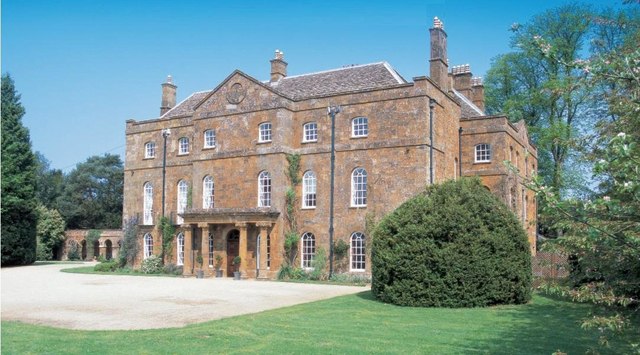
File:Adderbury Manor House - geograph.org.uk - 818088.jpgLater in her life, surprisingly, Elizabeth Malet relented and they were married in 1666, and  had a relatively stable marriage, with Elizabeth maintaining their country estate at Adderbury near Oxford. 


Rochester could not remain faithful however, and continued to enjoy numerous mistresses. When at home though,  he would write verses lampooning life at court, including this one on Charles II -

We have a pritty witty king
Whose word no man relies on.
Who never said a foolish thing,
Nor ever did a wise one.

Rochester and Buckingham influenced in turn a 'fast set' of impressionable men at court. These men were nicknamed by Andrew Marvell, 'the Merry Gang.' Hester Chapman in her book Great Villiers calls them 'a ring of poisonous dragonflies', which is a wonderful description as it describes how beautiful they looked, but also how dangerous they were.

Two of them, Sir Charles Sedley and Lord Buckhurst were responsible for an incident outside the Cock Tavern in Bow Street where they postured naked and made obscene gestures to the crowd below from a balcony. (Good taste prevents me from relating this incident in more detail!) Lord Buckhurst was also renowned for being one of the lovers of Nell Gwyn.

Many of the Merry Gang were also writers and playwrights of talent, involved with the new Vere Street theatre. Buckingham, Killigrew and Etheredge were all playwrights as was Wycherley whose work is still performed even today. Below you can see preparations for a modern production of The Country Wife, still going strong nearly four hundred years later. I drew on Wycherley's plays to give a flavour of period dialogue in The Gilded Lily.

Fully dressed
Preparations for a modern production of The Country Wife by William Wycherley
http://www.dal.ca/news/2011/03/28/meet_the_countrywife.html
Sedley was a talented writer, but during the performance of one of his plays the theatre roof fell in, injuring him. A flattering friend remarked that the play was so good and full of fire it had blown up the theatre, but Sedley apparently said, 'Nonsense! It was so heavy it brought down the house and buried the poet in his own rubbish.' So the Merry Gang were also renowned for their humour as well as their darker exploits. And I wonder if this is where we get the phrase to 'bring the house down'?!

In The Gilded Lily, Sedley, Buckhurst and George Etheredge all make an appearance. The lives of the Merry Gang are fascinating and complex, and for those who would like to know more I can recommend the following books;

The Lives of the English Rakes by Fergus Linnane
Constant Delights:Rakes Rogues and Scandal by Graham Hopkins
Charles II and the Duke of Buckingham - David Hanrahan
A Gambling Man, Charles II and the Restoration - Jenny Uglow

THE GILDED LILY is out now in paperback, and on special offer on Kindle.

Sunday, 17 February 2013

Lady Mary Wroth - paving the way for women writers


In earlier centuries it was not so easy to pusue a career in writing if you were a woman. In the 17th century there were a few notable women that made a name for themselves through their writing, Aphra Behn was probably the most famous, but Mary Wroth was another whose life and works are often overlooked today. I think her life is fascinating and she is on my shortlist of  'what to write about next.'

Lady Mary Wroth was the daughter of Sir Robert Sidney, later Earl of Leicester, and Lady Barbara Gamage. She is best known as the first English woman to write a sonnet sequence and her work helped to open up the English literary world to women. She was one of the first women writers to move beyond solely religious or pious subject matter, by writing secular love poetry and romances.

She was born Mary Sidney, on October 18, 1587 and like other wealthy girls of her day, Wroth was taught at home by private tutors. Her mother was known as a patron of the arts, and in 1973 a previously unknown manuscript containing 66 poems written by her father was discovered. A love of poetry  seemed to run in the family. Mary Wroth was heavily influenced by her father's literary brother and sister -  her uncle, Sir Philip Sidney, was famous as a poet, and her aunt, Mary Sidney, Countess of Pembroke, both composed her own and edited her brother's works.

In contrast to Mary Wroth's literary family, her husband, Sir Robert Wroth, whom she married in 1604, had little interest in the arts. He was a wealthy landowner and preferred hunting and outdoor pusuits.Sir Robert Wroth had a reputation as a wastrel, a spendthrift, a drunkard, and a womanizer. Mary must have been relieved at his death, though not when she discovered he had left her in debt. 

However, her husband's friendship with King James I did at least bring her to court. She even got a role in a masque - Ben Johnson's Masque of Blackness, as the Ethiopian nymph Baryte. Lady Mary became a personal friend of Ben Jonson who dedicated The Alchemist to her, and there has been speculation that she might have been his lover, though there is little evidence to support it. 
After her husband's death she could no longer afford the expense that attendance at court demanded, and she was plagued by vicious rumours, which led eventually to her fall from favour with Queen Anne. This led to her concentrating more on her work, and in doing so she produced Urania, a pastoral romance containing thinly veiled references to characters at court. Sir Edward Denny, obviously suffering from a guilty conscience, took the work to refer to him, and an account of his own infidelities, and he complained to the King. 

Denny succeeded in having Wroth's book removed from circulation, and her work fell out of favour. Love's Victory, a tragi-comedy was written in the mid 1620's despite her lack of popularity. Mary Wroth died almost a recluse in 1653, at the age of 66.

From her long poem: Pamphilea to Amphilanthus 

Love like a jugler, comes to play his prise,
And all minds draw his wonders to admire,
To see how cuningly hee, wanting eyes,
Can yett deseave the best sight of desire:

The wanton child, how hee can faine his fire
So pretely, as none sees his disguise!
How finely doe his tricks, while wee fooles hire
The badge, and office of his tirannies,

For in the end, such jugling hee doth make
As hee our harts, in stead of eyes doth take
For men can only by theyr slieghts abuse

The sight with nimble, and delightful skill;
Butt if hee play, his gaine is our lost will:
Yett childlike, wee can nott his sports refuse.
Deborah's books
Deborah's Blog

Wednesday, 9 January 2013

HOYDENS NEWS

A very happy Hoydens New Year to all our followers.

2012 has been an exciting year for all of us and to bring everyone up to date...

ANITA DAVISON (writing as ANITA SEYMOUR) has a new biographical novel,  coming out on 31st January.  With her feet firmly planted in the seventeenth century, ROYALIST REBEL tells the real life story of Elizabeth Murray.
It will be available from Amazon UK and US and all good book stores in the UK (and hopefully beyond!).


SANDRA GULLAND shared the outstanding news that the TV film rights for her Josephine Bonaparte Trilogy have been optioned with Michael Hirst as screen writer (who scripted THE TUDORS and ELIZABETH) and Kelsey Grammar as producer.


DEBORAH SWIFT's latest book THE GILDED LILY was released in late 2012.
The Gilded Lily was selected as one of the '13 must reads in 2013' by GoodMorning Texas TV programme.

Dee has been invited to appear on two panels (
'Making it to Mainstream' about my unusual route to publication, and 'The Virtual Salon' about how blogging can link writers with readers) at the Historical Novel Society Conference in Florida.  Dee says  "If anyone is going to the conference, particularly if you are a fan of Hoydens and Firebrands or the 17th century, please come and say hello. "Or you could rescue my husband who as yet does not know what he is letting himself in for!"


She has just finished working with the copy-edits for her next book 'A Divided Inheritance' and it's scheduled for publication with Macmillan in October 2013.


ALISON STUART'S latest book, a "Downton Abbeyesque" ghost story, GATHER THE BONES, set post World War I, also came out in late 2012. Her next book, a historical time travel SECRETS IN TIME is out in April. It is her first unashamedly romance book with a cavalier hero (of course).

Late breaking news:  GATHER THE BONES has been nominated as a Finalist in the Australian Romance Readers Awards.


KIM MURPHY has finished writing her non fiction book on rape in the American Civil War. A FATE WORSE THAN DEATH will be released either this fall or January 2014. She is currently working on the sequel to THE DREAMING: WALKS THROUGH MIST. The title for the sequel is THE DREAMING: WIND TALKER, which will include more conflict between the colonials and the Powhatan chiefdom in the seventeenth century.


MARY SHARRATT also had a late 2012 release with ILLUMINATIONS: A NOVEL OF HILDEGARD VON BINGEN which has been selected as a Best Book of 2012 by Kirkus, WGBH Greater Boston Public Television, The Examiner, The Reading Frenzy, and She Knows.


We may often write about different periods of history but our hearts belong to the seventeenth century. 

Here's to another successful year for the Hoydens.


Sunday, 30 December 2012

At home with a 17th century Vicar

Alfriston Vicarage - Tudor
I have recently been researching background information for the character of a 17th century parson, so I thought I'd share a few snippets of information about their households, or parsonages. First what is a parson? A parson is 'the priest of an independent parish church not under the control of a larger ecclesiastical or monastic organization.'(Wikipedia) Often the term is interchangeable with 'rector' or with 'vicar', but historically these terms are dependent on the status of the person with regard to their tithes. More information about this complex terminology can be found here
The first parsonages were very simple affairs constructed from wattle and daub, roofed with thatch or shingles.
Solar, Churche's Mansion, Nantwich Cheshire
As time went on more elaborate dwellings began to be built so that by the Middle Ages some parsonages were equipped wih a solar (warm sunny gallery on the first floor) or more chambers to receive guests, such as the one in West Dean Sussex with its tracery windows and newel staircase.
West Dean Rectory
Most 17th century parsonages were housed within church grounds or close by so that parishioners could know where to find the incumbent.At this time the parson was allowed to have 'husbote' or free wood for his fires and for repairs to his outbuildings. Most parsonages also had stabling for horses as it was a prerequisite that he should offer hospitality to those who demanded it.


Flitton Vicarage in 1827,built in 1606 painted by Rev. Henry Wellesley
Because of the duty of hospitality the household would usually consist of a number of servants as well as the vicar himself. Matthew Knyghtley's rectory in Leicestershire was run by 'a day-woman, two servants and a cook'. Although the rector or parson of the 16th and 17th century was more often celibate, there were a number of married clergy, known as uxorati, as well as untold numbers of 'co-habitations' with servants, 'nieces' and 'spiritual daughters'.

This behaviour was seldom censured by the church, but met with wide disapproval amongst parishioners. In June 1610 a Mr and Mrs Holland declared that 'The World was never merrie since priests were married'.
The practice of marriage was popularised in the West by the followers of Martin Luther who himself, a former priest and monk, married Katharina Von Bora, a former nun, in 1525. In the Church of England, however, the Catholic tradition of clerical celibacy continued after the Reformation, though in 1547, in the reign of Edward VI Anglican priests were allowed to marry for the first time.

Some parsons had such large families that they found it hard to manage financially. The Vicar of Hungerton in 1614 said, 'my livinge is very small...if I had not lately received a gratuity I had not been able to maintayne myselfe and eight children'.

In most rectories furniture was simple - trestle tables, benches and stools, with pewter dishes, horn drinking cups and iron cooking vessels. After the Reformation a parson or rector was supposed to avoid ostentation in his personal belongings but it was considered perfectly acceptable for him to brew his own beer and many parsonages also had a brewhouse attached.

In towns where the population was bigger, the rectory could be a grander affair. The parson's study had become a necessity since the Elizabethan drive to raise the standard of education of the clergy, so many 17th century clergy owned considerable libraries. When  Matthew Knyghtley died, his books were valued at twenty pounds, whereas his three silver spoons were worth only 12 shillings. As books were so valuable the study often contained a bed, for the books were too rare and costly to be left unguarded, and would frequently be studied deep into the night.
17th century Book of Common Prayer 
During the Civil Wars many parsonages and rectories were plundered - not always by the Roundheads but by both sides. Usually the troops were after bedding - plentiful in a vicarage where hospitality was the norm. John Dod, Vicar of Fawsley was looted three times by the Cavaliers. On the second occasion he was ill in bed and they stole the pillows from under him, on the third occasion he outwitted them by hiding some goods including his best sheets, under the cushion he was sitting on.

And at Kilworth in Leicestershire the disposessed Royalist rector Samuel Cotton, assisted by some Cavaliers, ousted the Presbyterian successsor and his wife in the middle of the night and took over their former home, placing guards at the doors to prevent them re-entering.The walls of the rectories would have some exciting stories to tell if we could only unlock them!
Church of St Lawrence, Alton, Hampshire showing shot holes from
the English Civil War
Thank you for reading, my website is at www.deborahswift.blogspot.com
and you can find out more about my novels here:
The Lady's Slipper  The Gilded Lily  A Divided Inheritance

Further Info: The Country Priest in English History by A.Tindal Hart
Birth Marriage and Death in Tudor and Stuart England by David Cressy

Sunday, 11 November 2012

17th Century History of A Haunted House - Borwick Hall


Just up the road from where I live is a massive gatehouse and high walls and a tantalising view of crenellated stone and high roofs. Walking all around the wall it becomes apparent that behind the walls lies  a wonderful old house, not open to the public, but a gorgeous stately stone building which has obviously stood for many generations. Enquiries revealed this building to be Borwick Hall.

This gateway was built by Robert Bindloss, the third Robert of his family, in 1650. He had been created a Baronet by Charles I. The Bindloss family had amassed a fortune from their business as clothiers. Robert was elected as the Member for Parliament for the Borough of Lancaster (aged 16) in 1640 and the following year he was knighted by Charles I. In London there was a saying "As rich as Sir Robert in the north." Nowadays it is hard to imagine anyone of 16 becoming an MP.

During the English Civil Wars however, he did not fight for his King - he was afraid to take sides in case his property was requisitioned by one side or the other. He was appointed a High Sherriff for Parliament as well as serving the Crown.

When the young Prince Charles (to be CharlesII ) fled in 1651 he insisted on a safe house at Borwick but Sir Robert himself was nowhere to be found, having taken refuge at a safe house himself away from the possible embarrassment of his two-faced position.

According to local legend, the young King Charles wasted no time in using his considerable charm to take advantage of the warm August night and a first floor bedroom at Borwick Hall to father a child with a young local woman, Lady Dashwood, arranged for his convenience. Afterwards he did honour his obligations though and made provision for the child. Rents from certain properties were made over to Lady Dashwood and were still paid right up until the last century.

After the young Charles's visit, Robert Bindloss stole quietly home. He was by all accounts an extravagant man who took to living beyond his means. He was also not well liked for his persecution of the Quakers at Yealand who were associated with the then radical George Fox. Sir Robert often sent armed guards to break up their meetings, egged on by his personal chaplain Dr Sherlock, a zealot who applied what he regarded as God's will with sinister enthusiasm.

Borwick Hall is said to be haunted by a starving girl who fought against her parents who had arranged her wedding - as punishment she was locked in the tower and forgotten about and starved to death, but her ghost still walks the corridors looking for vengeance.

There is also a story that an old lady knocked on the door in a blizzard one New Years Eve looking for some place to stay. Sir Robert put her up and made sure she was well fed. The next day she gave him a ripe apple and said if he kept it high up above the fireplace all year he would have good fortune that year. If he took it down then disaster would happen. It is still a tradition for someone to knock on the door and hand over an apple to this day.

Sir Robert died without a male heir in 1664 leaving Borwick Hall and his estate to his daughter, Cecilia. She married a Standish, a local prominent Lancashire Catholic family.

As for the Hall, it was used by the military in World War II, then sold off for the sum of £8,800. An amount of £650 was paid by the war department for dilapidations.Later it became a holiday camp and now it belongs to the Lancashire Youth Clubs Association who remain the present owners.
My books are 

The Lady's Slipper - An artist, a wild orchid and early Quakers  in the years following the English Civil War. 
The Gilded Lily - Beauty, desire, danger and redemption in Restoration London

Sunday, 23 September 2012

Traffic Jams on London Bridge in the 17th Century

When I was writing THE GILDED LILY, one of the things that struck me the most about London was that there was only one bridge over the river Thames - London Bridge, which was the same bridge that had stood there since 1209. The only other way to cross the river in this period was by boat.

The money for the original construction of the bridge was raised in part by allowing the land on the bridge to be sold for dwellings. By Stuart times there were more than two hundred buildings on the bridge, both residential and commercial. Some stood up as high as seven storeys and overhung the river by several feet. This picture shows just how far out they protruded.

In the middle of the bridge was a Chapel to St Thomas Becket, built by King Henry II, which became the official start of pilgrimages to Becket's shrine at Canterbury. This chapel actusally took 33 years to complete, and was not finished in Henry's lifetime. King John had to license out more building plots on the bridge to help recoup the costs of Henry's repentance.

Looking at these pictures of London Bridge you can see that the buildings were truly monumental.


So tall-ships could pass upriver there was a drawbridge, and there were defensive gatehouses at both ends, one of which supported a tower on which traitor's heads used to be displayed on iron spikes. This  practice was finally stopped in 1660, following the Restoration, presumably so as not to remind the King of the fate of his father! You can see traitors heads on this print by Visscher from 1616, which was the nearest image I could find in my research with detail of the bridge, although there is doubt now as to its accuracy as it was copied (with a degree of artistic licence) from an earlier drawing.

The buildings on London Bridge were a major fire hazard and in 1212, perhaps the greatest of the fires broke out on both ends of the bridge, trapping many in the middle as the flames at each end raged towards each other, resulting in the death of an estimated 3,000 people. Houses on the bridge were also burnt during the Peasants Revolt in 1381. As for the period I am interested in, a major fire had destroyed a third of the bridge in 1633, but this was fortunate as it formed a firebreak that prevented further damage to the bridge during The Great Fire of 1666.

The width of the actual bridge was about 4 metres, and it was divided into two lanes, so that whichever way you went, whether in a coach and horses, with a wagon or on foot, you had to negotiate a road only 2 metres wide. No wonder the bridge was congested and crossing it could take up to an hour! Those who could afford the fare might prefer to cross by ferry but as I discovered, the actual bridge structure made passing under it by boat quite dangerous.

To support this amount of wood and masonry nineteen arches had been made, none of which were the same dimensions because the river bed was tidal and the foundations uneven, so the 'legs' or piers were built onto boat shaped structures called "starlings" set into the river-bed. The narrow arches and wide pier bases restricted the river's tidal ebb and flow so, that in hard winters, the water upstream of the bridge became more susceptible to freezing. In The Gilded Lily I use the frozen Thames, and the Frost Fair upon it, as one of the settings. 


Old London Bridge model; seen from the East with part of the Pool of London shipping in the foreground, in about 16th century. This view of London Bridge shows St. Magnus Martyr church on the north bank and Nonsuch House in the foreground - Nonsuch house replaced the medieval drawbridge gatehouse.

Artist/Photographer/Maker
John B. Thorp 1901-1939
By the 17th century the flow was further obstructed as waterwheels had been installed under the two north arches to drive water pumps, and under the two south arches to power mills and granaries. At the time my novel is set there was a difference in water levels on each side of the bridge. Negotiating it meant braving rapids with a drop of almost two metres. Most boats stopped on one side, allowed passengers to alight, and then they had to pick up a boat further downstream.

Because the river flowed much more slowly above the bridge it often froze. In the 17th century because temperatures were lower and it was known as The Little Ice Age it froze several times.The tidal nature of the river meant that plates of ice formed and then the level of the river would rise again and create vast layered platforms or glaciers of ice. This picture by Hondius of 1677 shows London Bridge in the background and the amazing glacial landscape of the Thames in the foreground.

File:The Frozen Thames 1677.jpg

"Thousands and thousands to the river flocks,
Where mighty flakes of Ice do lye like Rocks,
There may you see the Coaches swiftly run
As if beneath the Ice were Waters none,
And sholes of people every where there be
Just like to herrings in the brackish Sea."

Excerpt from a long poem about a  Frost Fair from a Print of 1684.

THE GILDED LILY is out now, here's the trailer - enjoy!


Sunday, 24 June 2012

Hoydens News and Updates

It's proving to be a big year for the girls at Hoydens and Firebrands and we are very excited to share our news with our readers.


Mary Sharratt reports

My news is that I'll be speaking at Capturing Witches, an interdisciplinary academic conference commemorating the 400th anniversary of the Pendle Witch Trials, at Lancaster University, August 17-19. There will be distinguished speakers from all over the world addressing topics as diverse as historical witchcraft, gothic fiction, Neopagan practice, and the horrifying persecution of so called "child witches" in modern day Nigeria.

My forthcoming book ILLUMINATIONS: A NOVEL OF HILDEGARD VON BINGENwill be published by Houghton Mifflin Harcourt on October 9 and will explore the life of the 12th century visionary abbess, composer, polymath, and powerfrau. 

On October 7, Saint Hildegard will be elevated to Doctor of the Church. Currently there are only thirty-three Doctors of the Church and only three are women. This is a solemn title given to theologians who have made a significant impact. 
My book tour will also be launched on October 9 at Common Good Books in Saint Paul, Minnesota.


From Sandra Gulland:


My own news is in the "soon to come" category!


I am releasing e-book editions of all my novels in all territories outside North America (where they are already published). This will be under my own imprint—Sandra Gulland Ink—so I'm quite excited about it. For information see http://www.sandragulland.com/books/sandra-gulland-ink/


Also, my next novel, a second one set in the Court of Louis XIV, the Sun King, is in final draft, and will be published in May of next year.


And, I've contracted with Penguin to write two Young Adult novels, at least one of which will be the story of Hortense, Josephine Bonaparte's daughter. 


Our newest Hoyden Dee Swift writes:

My next book The Gilded Lily, set in Restoration London in the little ice age finally has its covers.Two very different views of the same book, but both reflect it very well I think. It tells the story of two sisters - one pretty and one plain, on the run and looking to re-invent themselves and find their fortune in fashionable society. How will they fare? And when one begins to rise and the other to fall, and their relationship crumbles,will they help each other when danger strikes?

It's publication date is 13th September (UK) and 26th November (US)

Meanwhile, I've  Just finished my third novel, working title "A Divided Inheritance", which is set in England and Spain and will be published by Macmillan in 2013.


Alison Stuart reports:

My next book, GATHER THE BONES comes out in September 2012 from Lyrical Press.  Sadly, it is not a seventeenth century story. I am traversing Downton Abbey territory (if you can imagine Downton Abbey with ghosts).

Set in 1923 against a background of the Great War, grieving war widow, Helen Morrow and her husband’s cousin, the wounded and reclusive Paul are haunted not only by the horrors of the Great War but ghosts from another time and another conflict. A coded diary provides the clues to the mysterious disappearance of Paul’s great grandmother in 1812. As the desperate voice of the young woman reaches out to them from the pages, Paul and Helen are bound together in their search for answers, not only to the old mystery but also the circumstances surrounding the death of Helen’s husband at Passchandaele in  1917. As the two stories become entwined, Paul and Helen will not find peace until the mysteries are solved.


And in late breaking news:  Alison has sold a "time slip" novella (with its feet in the seventeenth century) to Lyrical Press.

From ANITA DAVISON:

Coming in early 2013 from Pen and Sword Press, ROYALIST REBEL, a Novel Based on the early life of Elizabeth Murray, Lady Tollemache, Countess Dysart, Duchess of Lauderdale.

Last but by no means least KIM MURPHY:

Kim reports that she has been working hard on her non fiction foray into the American Civil War.  In the meantime her book  THE DREAMING: WALKS THROUGH MIST received an Honorary Mention in ForeWord magazine's Book of the Year Awards. Congratulations, Kim!


That's it from the Hoydens for now...watch out for all these exciting new releases in the next 6 months!

Sunday, 17 June 2012

Portrait of a 17th century English Village House


Following on from Sandra's post about domestic interiors in Holland, I am lucky enough to live in an English village which has many houses still in existence dating from the 17th century. The evidence for this is written above the doorways in “datestones”, the initials of the original occupier and his wife, thoughtfully carved in stone along with the date. 

In North Lancashire most houses were built of cruck (oak arch) frames with wattle and daub infill, and thatched with straw, or even bracken if you were poor. The average house consisted of four bays (the space between the cruck arches), but some as few as one. Chimneys slowly appeared in the 17th century, at first as a mere projection from the gable end to keep smoke and fire from the thatch. 

Cruck buildings survived until the Victorian Era -
The Blacksmith's 
The Mourholme Local History Society has done much work to uncover the history of the village and has trawled through Wills and probate inventories, and in my research for The Gilded Lily I referred often to their book “How it was – A North Lancashire Parish in the 17th Century” which gives details of these bequests.

In the first half of the century the position of rooms in a house was defined by their relationship to the main room, known as the firehouse or the bodystead. In the second half of the century side-rooms are defined by name as buttery (a place for keeping, not making, butter) kitchen, bed-chamber, wash-house. The main room was later described as the parlour or bower. The increase in this standard of living had come earlier in the south but was much slower to spread northwards.

Most village houses were furnished simply. Items mentioned in inventories include

Bedstocks or beadsteads with chaff or feather mattresses.These were mostly 'tester' beds with curtains that could be drawn to provide warmth and privacy.

Tables – surprisingly these feature only in 21% of inventories in the first half of the century, rising to 60% in the second. There were however “trests” – a trestle with a board that could be erected and removed to save space. (The idea of the board survives in the English language as the expression "Bed and Board" or 'boarding house' and even 'boarding school.')

Tableware – from pewter or wood, with wood or horn spoons.

Chairs, stools and ‘formes’ – simple wooden furniture. When I say simple, the construction was simple, but often decoration was added afterwards by the householder resulting in quite elaborately carved items.
An Ark storage box
A man's chair, women's chairs had no arms
so they could knit and sew


Arks – mentioned in half of the inventories were bins made of split wood and pegged together.They were used for storing flour or meal, and could be taken apart for cleaning.

Almeryes – a type of cupboard with a pierced door. Thomas Greenwood who lived in the village had what he called a ‘Cat Mallison’ to keep meat and cheese in. As a maleson meant a curse, we assume it was to keep the cat from the meat!

Brandreth and cauldron – a brandreth was an iron trivet to set over the fire. The cauldron could be set on this, or on rackencrooks (an adjustable hanger from the ceiling).The fires burned peat turves cut from the local marshes, most inventories include stocks of peat for burning.

Quishons (cushions) and other soft furnishings are mentioned frequently; beds were usually draped four posters with bolsters and pillows, though very few inventories mention curtains – I can only assume shutters were employed against the weather.

From these simple rural surroundings in rural Westmorland Ella and Sadie Appleby, the two sisters in The Gilded Lily, are on the run. They set off for London, with only vague ideas that it might be some sort of promised land of milk and honey, that there would be glamour and fortune awaiting them there. For Charles II had returned to the throne and London was at its most glittering and fashionable. What better way to see 17th century London than through their amazed eyes. As a writer I wanted to know how they would cope, and even more intriguingly, how London would change them.

The Lady’s Slipper is out now. The Gilded Lily will be released in the UK Sept 13th and the US Nov 26th 2012www.deborahswift.blogspot.com

furniture pictures from www.periodoakantiques.com and www.onlinegalleries.com